
Manage Supermarket Simulator
Manage Supermarket Simulator is a hands-on management game about running a supermarket with limited starting funds. Order products, arrange shelves, serve customers, monitor market prices, and reinvest earnings to expand the store and unlock additional goods.
Screenshots
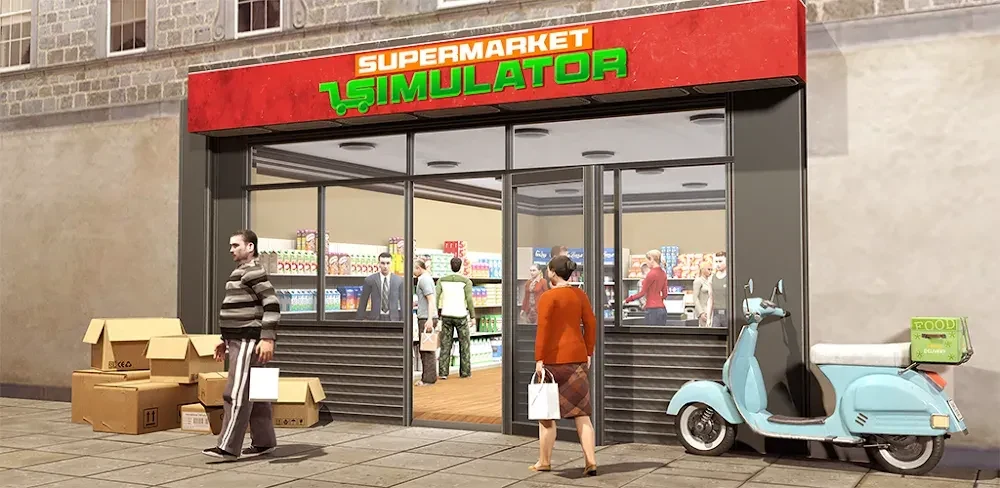
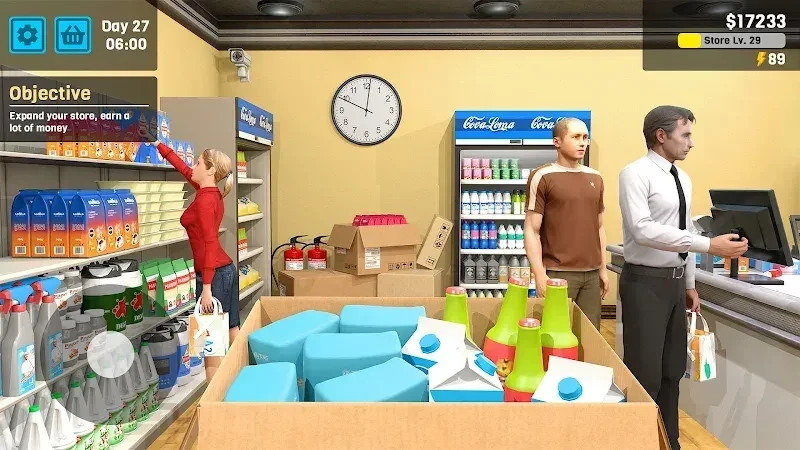
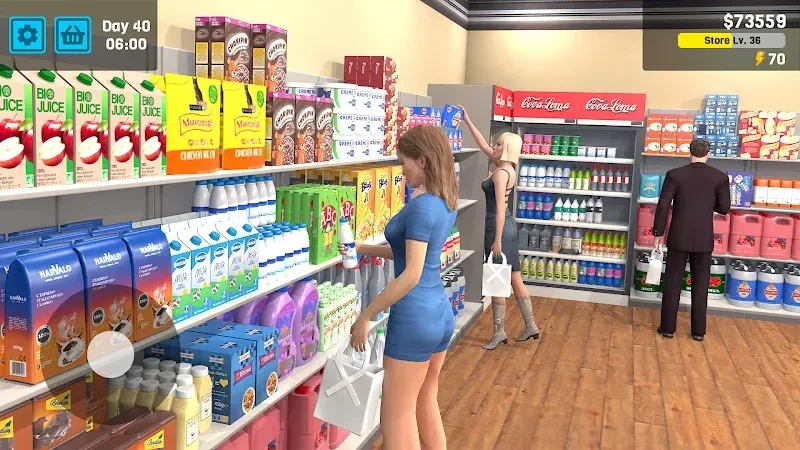
About this app
Manage Supermarket Simulator is a supermarket management game in which you begin with a small shop and limited funds. The central activity is to order goods, place them on shelves, open the store, and handle the work needed to keep products available for customers. Earnings can then be used to develop the shop, improve its level, expand the premises, and unlock more products.
Starting with limited stock and space
The game begins with a small supermarket rather than a fully developed store. This gives each early purchasing decision a direct effect on what can be offered for sale. Players must spend money to import goods, choose from the available product range, and prepare the shop before opening its doors.
The described stock includes categories ranging from spices and drinks to snacks and fresh products. A wider selection can be created by purchasing different types of goods, while new products become available as the supermarket level increases. The source does not define a fixed ideal assortment, so the important documented choice is how to use limited funds across the products that can be ordered.
Ordering goods and placing them on shelves
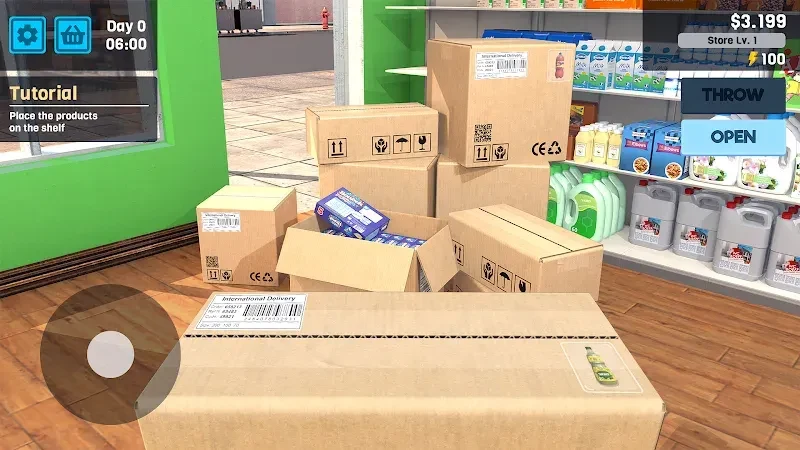
Restocking follows a clear sequence. Players order products, pay for them, and receive the delivery at the supermarket entrance. The goods then need to be moved into the store and arranged on shelves before customers can buy them. This makes delivery and shelf organization part of the regular operating routine rather than a separate background system.
The store begins with restricted financial resources, so ordering everything at once is not presented as a guaranteed solution. The supplied guidance instead emphasizes observing which products sell and avoiding putting the entire budget into an item with weak demand. It also describes delivery fees, meaning that repeated small orders can reduce the money available for stock and store development. The source recommends planning larger orders when possible, while acknowledging that an urgent restock may still be needed during the workday.
Using sales information to guide stock choices
Customers provide information about what the store is selling. By paying attention to their purchases, players can form a general view of which products need to remain in stock. This connects customer activity with the next ordering decision: popular goods may need replenishing, while slower-moving items can tie up funds if purchased in excessive quantities.
The source presents supply and demand as especially important during the early phase, when the budget is tight. Running out of a popular item can leave the store without stock to sell, while investing too heavily in an unpopular product can make it harder to maintain the rest of the supermarket. These are documented management considerations, not a stated guarantee that every customer will respond in a particular way.
Setting prices around market information
Pricing is one of the game's main decision points. When an item is priced, the game provides its purchase price per unit and a market price. Players can then enter different selling prices and see the profit associated with those choices. This information connects the shelf price to the cost of acquiring the product and the potential return from a sale.
The supplied description also says that purchase and selling prices change with market fluctuations. Players can therefore buy desirable goods when prices are low and sell them when prices are high. The game frames this as a combination of timing and strategy, but it does not provide a fixed market schedule or guaranteed profitable trade. Pricing too high is described as potentially reducing sales, while pricing too low can limit profit, so the supported choice is to balance the displayed market information with the store's need to earn money.
Opening the store and handling daily work
Before customers arrive, players need to move around the shop, bring in ordered goods, arrange products on shelves, and open the door. The description characterizes the work as busy and requires players to remain involved in the store's operation. This hands-on structure links preparation tasks with the customer-facing part of the day.
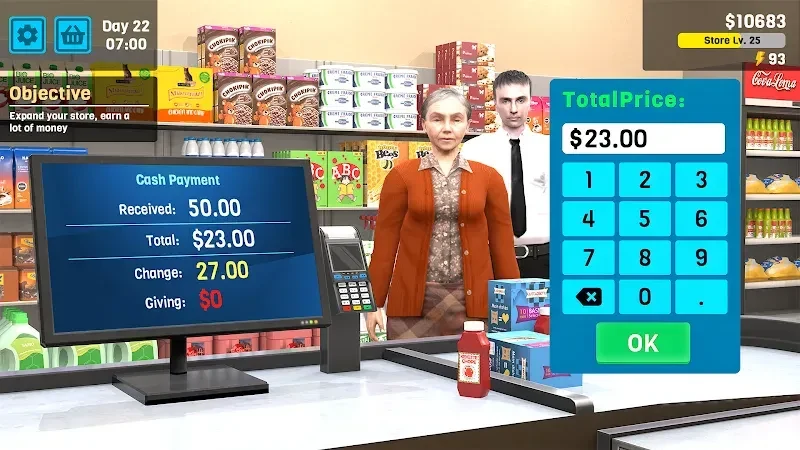
The game also describes financial transactions as part of the checkout process and refers to different payment methods, including card payments. These transactions are presented as active parts of running the supermarket rather than an automatic calculation alone. The source does not specify every checkout rule, so the supported point is that payment handling is included in the store-management activity.
Promotions, maintenance, and store development
Sales events are another documented way to attract customers. The source describes creating promotions and maintaining customer interest through continuing sales activity, but it does not set out a particular promotion formula or guaranteed result. Promotions therefore sit alongside pricing and stock management as another decision available while developing the shop.
Store maintenance includes renovating and upgrading the supermarket over time. As the supermarket level rises and the business gains better financial conditions, players can buy more items and expand the store. Progression is therefore connected to several linked actions: purchase goods, prepare the shelves, open for business, earn funds, and reinvest those funds into a larger store or newly unlocked products.
Manage Supermarket Simulator focuses on the relationship between stock, pricing, customer purchases, and expansion. Its most detailed mechanics concern choosing goods with limited money, tracking changing market prices, deciding what to reorder, and using the proceeds of sales to develop the supermarket.
Version history
View all02 Apr 2026 · stable