

Third Wheel
stinkdogThird Wheel is a short, choice-driven visual novel about Chris, an antelope navigating queer romance and an intrusive inner voice. Its three routes, replay-focused structure, offline play, and hidden ending give each decision lasting narrative significance.
Screenshots
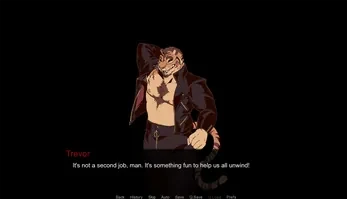
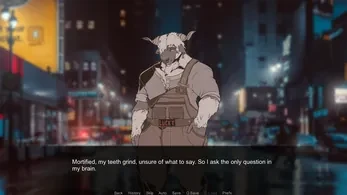
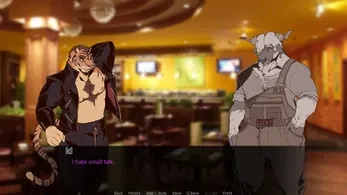
About this app
Third Wheel follows Chris, an antelope trying to navigate queer romance while an intrusive inner voice complicates conversations, social moments, and relationships. The game turns that premise into a compact visual novel built around dialogue, emotional character development, and meaningful choices rather than action or complex systems. Its short chapters make the story manageable in a single sitting, while three narrative routes and a hidden outcome give players reasons to revisit earlier scenes. The result is a focused experience for readers who enjoy mature themes, branching relationships, and discovering how different decisions reshape a character-led story.
Short chapters with several possible outcomes
The story is divided into brief chapters, with three main routes leading to different endings. Two routes serve as the primary romance paths, while the third is a secret route that becomes available after the two good endings have been completed and a new game is started. This structure makes route completion part of the narrative progression: players are not simply moving through one fixed plot, but uncovering additional perspectives on the same central situation.
Choices affect both immediate responses and longer-term relationships. An answer selected in an earlier conversation can influence which later scenes or exchanges become available, so replaying is useful for more than seeing a different final screen. Players can compare character reactions, find alternate dialogue, and observe how earlier decisions change the tone and direction of subsequent encounters.
Dialogue-led progression
Third Wheel keeps its gameplay centered on reading and decision-making. Players advance through dialogue scenes, then select responses at occasional choice points. Progress depends on the endings reached and the conditions needed for later routes, not on reflexes, combat, puzzles, or skill-based grinding. The main challenge is recognizing how choices connect across a playthrough and deciding whether to follow familiar answers or test a different approach.
Because the playthroughs are concise, experimentation is relatively approachable. Players can use different responses to explore alternate character dynamics and uncover dialogue that may not appear on the first run. The hidden route provides a specific long-term objective for players who want to examine the available endings more carefully.
Simple controls and replay conveniences
The interface uses familiar visual novel controls. Tapping or clicking advances the text, while on-screen menus present the available responses. Basic navigation controls allow previous lines to be reviewed, which is useful when a conversation moves quickly or when a player wants to reconsider an earlier detail.
Save and load checkpoints let players try decisions without replaying every preceding segment. Auto-advance and the option to skip text that has already been read also support repeat playthroughs. These features work together with the route-based design by making it easier to revisit key decision points and compare outcomes without turning each experiment into a full restart.
Focused artwork and restrained audio
The presentation concentrates on character expressions and small, focused scenes rather than a large collection of assets. Sparingly used backgrounds establish locations, while character portraits and occasional full-screen illustrations emphasize important moments. This limited visual approach keeps attention on the dialogue and the emotional shifts between characters.
Audio supports that emphasis with brief musical cues and ambient sounds used to underline changes in mood. The soundtrack and effects remain restrained, allowing conversations and character development to stay at the center of the experience. The compact presentation reflects the game's small, polished scope and its focus on clarity of expression.
Offline play and readable presentation
Third Wheel is designed for single-player offline play, so its narrative can be experienced without a network connection. Adjustable text speed gives readers control over the pace, while the dialogue history helps those who prefer to review previous lines or read more deliberately.
Clear fonts and visual contrast support text readability, and the uncluttered interface keeps interaction simple. These options do not change the branching structure, but they make the reading experience easier to adjust for different preferences. With its short scope, offline format, and emphasis on straightforward controls, the game offers an accessible introduction to branching visual novels while still rewarding players who explore its routes and hidden dialogue.
Version history
View all29 Aug 2026 · stable
Frequently asked questions
What is Third Wheel about?
Third Wheel is a choice-driven visual novel about Chris, an antelope navigating queer romance while dealing with an intrusive inner voice that affects social situations and relationships.
How many routes does Third Wheel have?
The game has three main narrative routes. Two are primary romance paths, and a secret third route becomes available after completing the two good endings and starting a new game.
Does Third Wheel support offline play?
Yes. The game is designed for single-player offline play and does not require a network connection for its narrative experience.
Can players save progress and replay decisions?
Yes. Save and load checkpoints allow players to experiment with choices, while auto-advance and skipping previously read text make repeated playthroughs more convenient.