
APECS: Body Posture Evaluation
SaneftecAPECS: Body Posture Evaluation uses photogrammetric tools to assess posture from several views and video. It also includes angle evaluation, range-of-motion measurement, and options to save, export, and share results.
Screenshots
About this app
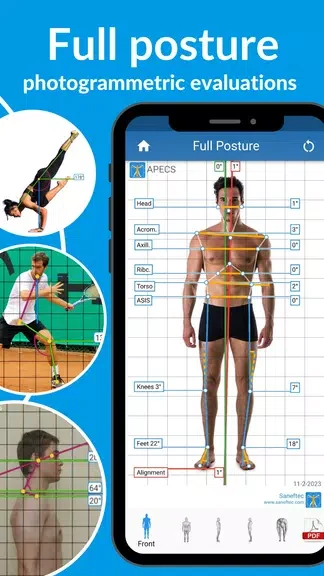
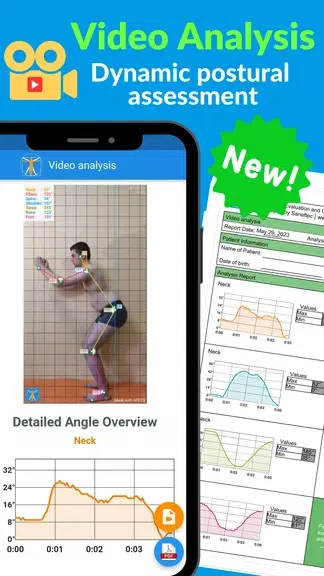
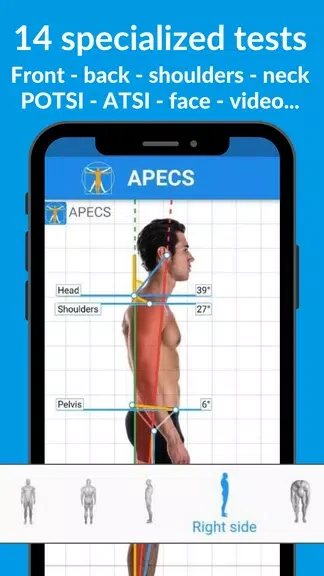
APECS: Body Posture Evaluation is an Android app for assessing body posture with photogrammetric tools. It addresses the task of observing posture from multiple views, including the front, back, and both sides, with analysis that also covers the head, neck, and shoulders. Users can assess movement through video and angle evaluation, or measure range of motion with a Goniometer tool. The app’s guide explains how to take photos and position markers, while automatic tracking and green marker recognition support the analysis process. Results can be saved, exported, and shared.
What posture views and body areas can you assess?
APECS supports front, back, left-side, and right-side posture analysis. Its whole-body assessment tools include evaluation of head, neck, and shoulder posture, giving users several views and areas to consider rather than focusing only on one position.
How does the app assess movement?
For dynamic posture assessment, the app uses video analysis and angle evaluation. It also provides a Goniometer tool to measure range of motion, which the source identifies as a feature for advanced users and researchers.
What should you do when taking an assessment?
APECS provides a detailed guide for carrying out an assessment. The source advises taking the corresponding photos and positioning markers correctly. Automatic tracking and green marker recognition are included to support analysis; following the guide is relevant to obtaining results from the photo-based process.
Can you keep or share assessment results?
Users can save, export, and share results, which can help them track posture assessments over time or share them with professionals. The app is described for use by both professionals and individuals, including in physical rehabilitation programs, athletic training, and well-being programs. These tools support assessment and tracking; the source does not specify a diagnosis or treatment function.
Version history
View all28 Oct 2024 · stable